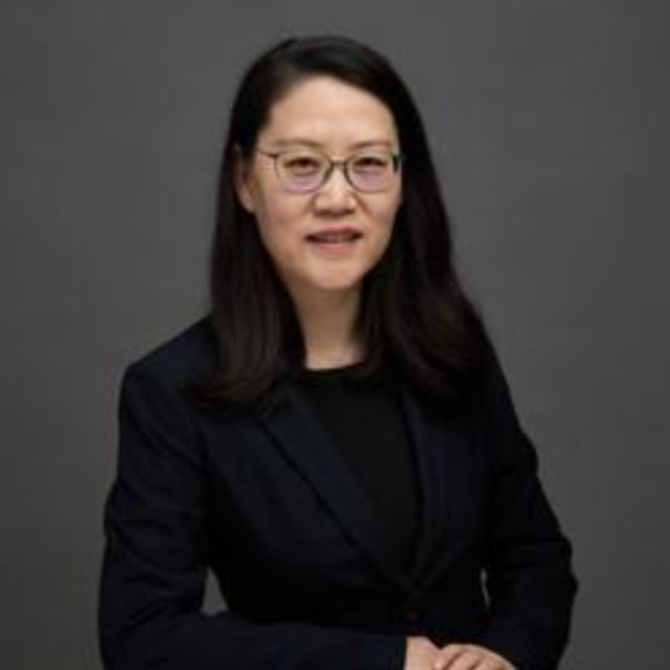
Yaguang Zheng, PhD, RN Assistant Professor, NYU Rory Meyers College of Nursing
Yaguang Zheng is an Assistant Professor at NYU Rory Meyers College of Nursing. Her research focuses on cardiometabolic risk reduction by leveraging mobile health, electronic health records, and data science techniques. Prof. Zheng has explored behavioral phenotypes through the use of wireless devices in clinical trials and real-world settings and their impacts on cardiometabolic disease prevention and management. Zheng’s initial work focused on lifestyle behavior changes through mobile health, more specifically, using mobile health for self-monitoring and its impact on weight-loss outcomes. After identifying a critical knowledge gap in the area of engagement with mobile health, Zheng conducted a pilot study that found that older adults were able to use multiple mobile devices to improve diabetes self-management, debunking traditional perceptions of older adults as being skeptical of multiple mobile technologies.
Zheng has also applied machine learning algorithms to analyze data from a large real-world sample that has yielded varied patterns of use of wireless devices over the course of a year, findings which are helping to target subgroups of individuals who need long-term engagement in using mobile health devices. More recently, Zheng has worked on electronic health record data, including mobile health data from wearable devices, like continuous glucose monitors, which has real-world application for clinical practice.
Prior to joining the NYU Meyers faculty, Zheng was a postdoctoral scholar supported by NIH grant T32 NR008857 Technology: Research in Chronic and Critical Illness at the University of Pittsburgh School of Nursing.
Project Title: Leveraging continuous glucose monitoring to reduce care burden for older Chinese Americans with Type 2 diabetes and mild AD/ADRD
Full Community Brief
Experience with Continuous Glucose Monitor in Reducing Care Burden for Older Chinese Americans with MCI and Diabetes
AUTHORS, AFFLIATIONS
Eric Chen, Bei Wu, PhD, Richard Lipton, MD, Katharine Lawrence, MD, MPH, Susan Zweig EdD, MD, Linda M. Siminerio, RN, PhD, DCES, Jessica Zwerling, MD, MS, Yaguang Zheng, PhD
NYU Rory Meyers College of Nursing; NYU Shanghai; Albert Einstein College of Medicine; NYU Grossman School of Medicine; University of Pittsburgh; Albert Einstein College of Medicine, Montefiore Hudson Valley Center of Excellence for Alzheimer’s Disease (CEAD)
PURPOSE OF THE STUDY
This study aimed to learn about older Chinese Americans’ experiences using continuous glucose
monitoring (CGM). Managing type 2 diabetes can be especially difficult for older Chinese Americans who also have mild cognitive impairment (MCI). Cultural traditions, financial strain, and health challenges can make diabetes care even harder. Continuous glucose monitoring (CGM) may help, but little is known about how well it works for this group.
MAIN PROBLEMS
- There is not a lot of research looking the CGM use in Chinese Americans who also have MCI.
Understanding their experience may help health insurance reimbursement of CGM application
in this populaiton.
KEY FINDINGS - Older adult study participants reported that CGM helped them see how different foods affected
their blood sugar, choose better foods and portions, and communicate more effectively with
their care partners. - Care partners agreed and added that the CGM data made it easier to encourage healthy
behaviors and increased their involvement because they could check the numbers and review
them together. - Patients wanted health care providers to give more direct feedback on the real-time data,
including nutrition advice that fits their cultural food preferences.
KEY TAKEAWAYS
- CGM is a helpful and feasible tool for older Chinese Americans with MCI and type 2 diabetes.
- Future research should combine CGM with education and behavior-support strategies to further
improve diabetes management in this population.